How to Motivate Kids to Study Without the Daily Struggle
Tired of the homework battles? Learn how to motivate kids to study with practical strategies that build focus, resilience, and a genuine love for learning.

When your child digs their heels in and refuses to study, it's almost never about laziness. Before you can motivate them, you have to play detective and figure out what’s really going on. Their resistance is a symptom, and until you diagnose the root cause—whether it’s fear, boredom, or just feeling completely overwhelmed—any "fix" will just be a temporary patch.
2. Diagnose First: Why Your Child Resists Studying
Those nightly homework battles? They’re just the tip of the iceberg. Pushing harder without understanding why they're resisting is like trying to fix a leaky pipe by yelling at it. It doesn't work.
Most of the time, the real issue falls into one of three buckets: they're scared of failing, they're swamped by the sheer size of the task, or they just can't see the point. A kid who’s terrified of getting a bad grade needs a different kind of support than one who thinks learning about the Civil War is a total waste of time.
This decision tree is a great starting point for mapping out the common paths of study resistance.
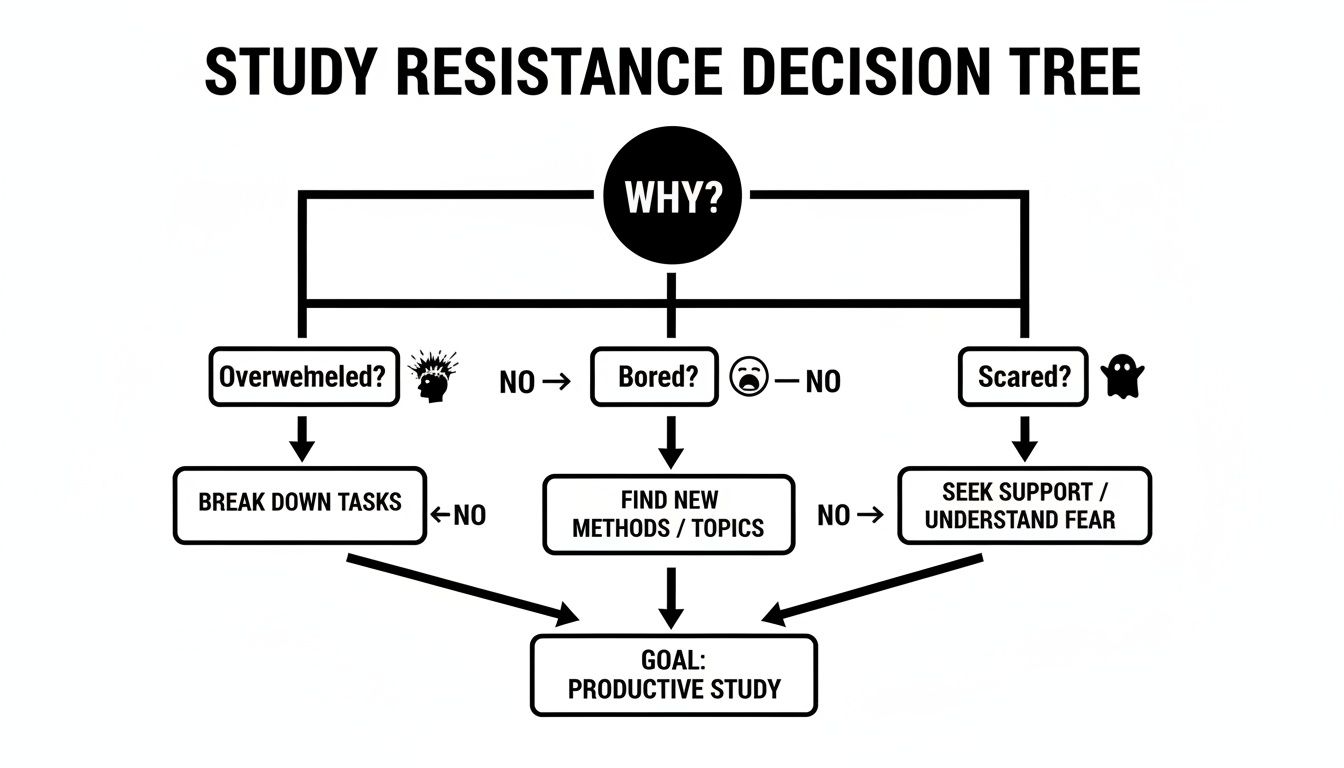
As you can see, a single behavior—like avoiding homework—can come from very different places. Your job is to respond with empathy and a strategy that actually fits the problem.
Uncovering The Hidden Blockers
The key is to open up a gentle, non-confrontational conversation. "Why aren't you studying?" is a question that immediately puts them on the defensive. Instead, get curious.
Try one of these conversation starters next time you hit a wall:
- "When you look at this math sheet, what's the first thing that pops into your head?"
- "If you could wave a magic wand and change one thing about this project, what would it be?"
- "On a scale of 1 to 10, how confusing are the instructions for this assignment?"
Their answers are your roadmap. A kid who says, "I don't even know where to begin," is probably overwhelmed. The one who sighs and says, "This is so pointless," is struggling to find a personal connection to the material.
If you’re a parent, you’re not alone in this. Recent PISA 2022 data revealed that nearly 50% of students struggle to motivate themselves for schoolwork every single week. This isn't just a household problem; it's a widespread challenge, underscoring that motivation is a skill we need to actively help our kids build.
To get a clearer picture of what might be happening, use the table below. It connects the behaviors you see with potential underlying causes, giving you a clear first step toward a solution.
Decoding Your Child's Motivation Blockers
| Symptom You See | Potential Root Cause | First Step to Take |
|---|---|---|
| Procrastination, "I'll do it later." | Feeling overwhelmed, fear of not doing it perfectly. | Break the task into tiny, 15-minute chunks. Just focus on starting the first one. |
| "This is boring," "This is stupid." | Lack of connection or relevance to their interests. | Find a real-world link. How does this math apply to their favorite video game? |
| Outbursts, crying, or shutting down. | Intense frustration or a possible learning gap. | Sit with them (don't teach) and just observe. See where they get stuck. |
| "I don't get it," gives up easily. | Fear of failure or a genuine lack of understanding. | Reassure them that effort, not perfection, is the goal. Ask, "What's the first tiny step?" |
By matching the symptom to a potential cause, you can stop guessing and start helping in a way that actually works.
It's also crucial to remember that for some kids, there's more going on beneath the surface. For those facing specific learning challenges, like in understanding ADHD and reading challenges, what looks like defiance is often just pure exhaustion from trying to work with a brain that's wired differently.
Once you shift from a place of frustration to one of curiosity, you can finally choose strategies that solve the real problem.
Designing a Study Environment That Actually Works
Where your child studies has a huge impact on their ability to focus. A chaotic, messy space sends a clear signal to the brain: it’s time to play or get distracted, not learn. The first step in building solid study habits is creating a dedicated, predictable study zone.
This doesn't mean you need a perfect, Pinterest-worthy office. It's simply about carving out a specific area—even just a corner of the kitchen table—that is consistently used for schoolwork. This simple act of association helps your child’s brain flip the "study mode" switch much more easily when they sit down.
To really set them up for success, finding one of the best childrens homework desks can be a game-changer. It establishes a dedicated home base for focus. Make sure the space is well-lit, comfortable, and stocked with all the necessary supplies. Removing those little points of friction—like having to hunt for a pencil—is a surprisingly effective way to cut down on procrastination.
Building a Distraction-Free Zone
Distractions are the arch-nemesis of focus. While you'll never get rid of every single one, you can definitely minimize the usual suspects. Think of it as creating a protective bubble of concentration around your child.
Start by identifying the main culprits:
- Digital Distractions: Let's be honest, phones, tablets, and random websites are the biggest offenders. Your best bet is to use parental controls or apps to block distracting sites during study hours. The phone shouldn't just be flipped over on the desk; it needs to be in another room entirely.
- Physical Clutter: A desk piled high with toys, old papers, and random stuff is visually overwhelming. A clear space really does promote a clear mind. Try taking just five minutes before each study session to tidy the area together.
- Noise and Activity: If the study spot is in a busy part of the house, a good pair of noise-canceling headphones can work wonders. It also helps to set a family rule: when someone is studying in the designated zone, everyone else tries to keep the volume down.
Creating a structured environment doesn't just reduce distractions; it reduces the mental energy your child has to spend resisting those distractions. This leaves more cognitive fuel for the actual task of learning.
Collaborating on a Realistic Study Routine
A predictable routine is every bit as important as a dedicated physical space. When kids know what to expect and when, those daily arguments over homework tend to disappear. The trick is to create this routine with them, not just for them.
A simple technique I love is called time blocking. Just grab a weekly calendar and sit down together to block out dedicated times for each subject or assignment. For younger kids, this might look like 30-minute blocks with short breaks in between. For older students, you could try 50-minute blocks to mimic their class periods at school.
For example, here’s what a middle schooler's afternoon might look like:
- 4:00 - 4:15 PM: Unpack, grab a snack (crucial decompression time!).
- 4:15 - 5:00 PM: Math Homework (get the hardest subject out of the way first).
- 5:00 - 5:15 PM: Break (time to stretch, get a drink, and reset).
- 5:15 - 5:45 PM: History Reading (an easier, lower-intensity task to finish up).
This simple approach turns a mountain of homework into a series of small, manageable hills. If you want more tips on tackling big assignments, our guide on how to study effectively from textbooks has some great strategies for breaking down dense material. Ultimately, building a system like this replaces nightly negotiations with a predictable, empowering plan.
Tailoring Your Approach by Age
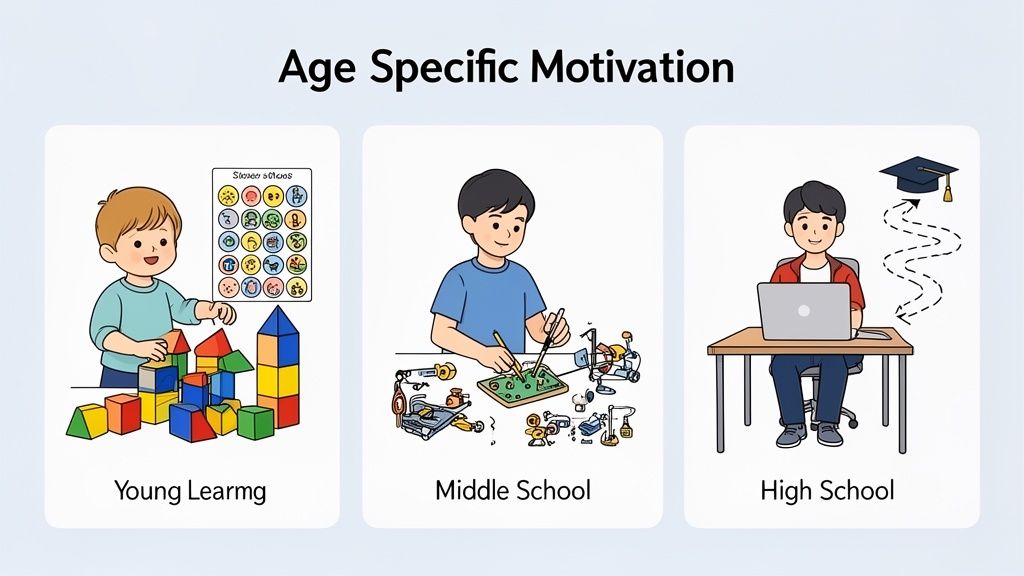
Let’s be honest: there's no single magic trick to get kids to study. What works wonders for a seven-year-old—say, a shiny sticker chart—will get a serious eye-roll from a teenager. Real, lasting motivation isn’t a one-size-fits-all solution. It’s about meeting your child where they are, developmentally, with strategies that feel relevant and empowering to them.
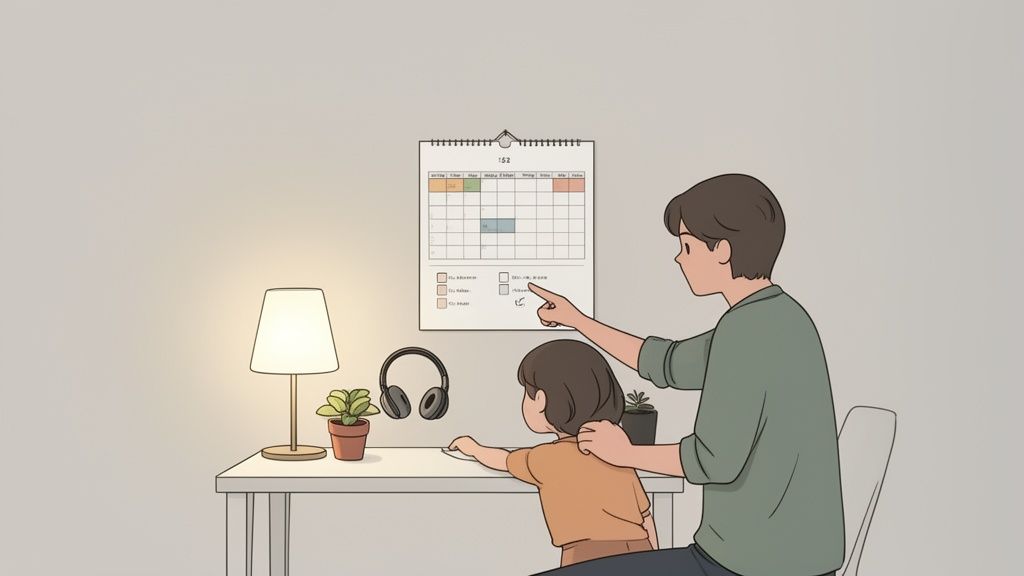
Think of it as speaking their language. For young kids, that language is play and pure curiosity. For teens, it's all about autonomy and purpose. Let's break down what actually works for each age group.
Elementary School: Make Learning an Adventure
For elementary schoolers, learning needs to feel like an exciting discovery, not a chore. Their world is concrete and immediate, so abstract goals like "getting into a good college" are completely meaningless. Your job is to connect schoolwork to their everyday life and make it hands-on.
Instead of just drilling spelling words, try a scavenger hunt around the house. When it’s time for math, have them help you measure ingredients for a recipe. The goal is to shift learning from a passive activity to an active experience.
- Gamify it: Use a timer to see if they can "beat the clock" on a math worksheet, or create a simple point system for chapters read.
- Connect it to their world: If the topic is plants, start a small herb garden together. If they're studying animals, plan a trip to the zoo or queue up a cool nature documentary.
- Study together: Read books out loud, taking turns with each page. This builds skills while turning study time into a bonding activity, not a lonely task.
Middle School: Guide Their Newfound Independence
Middle school is a time of huge change. Kids are figuring out who they are and craving more control over their own lives. This is where your motivation strategy needs to shift from parent-led activities to fostering a sense of ownership. It's the perfect time to link schoolwork directly to their budding passions.
Does your kid love video games? Take a look at the coding and storytelling that goes into making them. Are they obsessed with a musician? Research the history and cultural impact of that music genre together. You’re no longer just telling them to study; you're showing them that school subjects are the building blocks of the things they already find fascinating.
At this stage, your role shifts from director to consultant. Offer guidance and resources, but let them take the lead. Even small choices—like letting them decide whether to tackle math or history first—can provide a sense of control that is incredibly motivating.
This is also a great time to introduce project-based goals. Instead of focusing solely on a test score, help them plan something bigger, like building a model volcano for the science fair or creating a short documentary on their tablet. This gives their learning a clear purpose and a tangible outcome they can be genuinely proud of.
High School: Connect Today’s Work to Tomorrow’s Goals
By high school, the stakes feel higher. Teenagers are starting to think seriously about the future, and while a sticker chart won’t cut it anymore, connecting today’s effort to tomorrow’s goals becomes a powerful driver. The conversation needs to shift from "you have to do this" to "how will this help you get where you want to go?"
This is where intrinsic motivation really comes into play. A 2023 study confirmed that older students are highly driven by internal goals, like the desire for independence. In fact, a whopping 34% of UK students cited this as a key motivator. It's clear that tapping into their future aspirations is far more effective than dangling a carrot. You can read more about the connection between student self-efficacy and motivation in this study.
To tap into that drive, start having open conversations about what they're into and what their future might look like.
- Explore career paths: If they're interested in graphic design, research the courses and skills they’d need. Show them the path.
- Grant earned autonomy: Frame privileges, like a later curfew or more screen time, as a direct result of them responsibly managing their schoolwork.
- Build self-discipline: Help them create their own study schedules and systems for tracking assignments. This prepares them for the independence they’ll need in college and beyond.
When you tailor your approach, you’re showing your child you understand their world. That simple act of recognition can make them far more receptive to your guidance.
Fostering a Genuine Desire to Learn
While sticker charts and extra screen time might get you through a tough homework night, they don't build a lasting fire for learning. The real goal is to nurture intrinsic motivation—that internal drive where a child wants to learn for the simple satisfaction of figuring something out. It’s the kind of motivation that sticks around long after the rewards disappear.
Making this shift from enforcer to curiosity coach involves small but powerful changes in how you talk about school. It's all about celebrating the process, not just the final grade.
Focus on Effort Over Outcomes
Instead of immediately asking, "What grade did you get?" try a different question: "What was the hardest part of that project, and how did you figure it out?" This simple pivot moves the spotlight from a high-pressure result to their personal problem-solving journey.
When you praise their hard work, you validate their struggle and build resilience. This sends a clear message that hitting a wall is a normal, even valuable, part of learning—not a sign of failure. This approach is key to developing a growth mindset, where challenges are seen as opportunities to get smarter.
A fascinating 2023 global survey revealed that student optimism jumped to 65% and happiness to 77%, partly because accessible tech made learning less of a struggle. It's a great reminder that when studying feels more manageable, the internal desire to learn grows. You can dive into the full findings on student optimism and technology to see the data for yourself.
Make Learning Personally Relevant
Let's be honest: kids are far more likely to care about a topic if they see how it connects to their own world. Your job is to be the bridge-builder between their classroom assignments and their real-life interests.
- Connect to Hobbies: Does your kid love Minecraft? Show them how geometry is the secret behind building those incredible structures.
- Link to Entertainment: Watching a historical movie? Seize the moment to talk about the real events that inspired the story.
- Show Real-World Impact: Is the science lesson about ecosystems? Take a trip to a local park or nature reserve to see those concepts in action.
When a subject stops feeling like an abstract chore and becomes a tool for understanding their passions, the motivation to study clicks into place. This is also a fantastic way to develop true understanding. For more ideas, check out our guide on how to improve comprehension skills.
By connecting schoolwork to their world, you’re not just answering the dreaded question, "When will I ever use this?" You’re showing them that learning is a key that unlocks a more interesting and understandable world.
Celebrate Small Wins to Build Momentum
Staring up at the mountain of "mastering fractions" can feel overwhelming for anyone. But mastering just one tricky problem? That feels doable. Breaking down big study goals into tiny, achievable steps is the secret to building momentum.
Give a high-five for finishing a single challenging math problem, not just for acing the entire test. Acknowledge the effort it took to write one solid paragraph for that big essay.
These small victories build confidence and create a positive feedback loop. Each win makes your child more willing to tackle the next small step, and then the next, until they're looking back from the top of the mountain.
Using Smart Tools to Reduce Study Frustration
Let's be honest, sometimes the biggest hurdle to studying isn't laziness—it's sheer frustration. We've all seen it: a child hits a wall with a tough math problem or a dense chapter in their history book, and their motivation just evaporates. This is where a smart tool can be a game-changer, acting more like a tireless study partner than a simple shortcut.
The goal here is to smooth out the rough patches that make kids want to give up. Instead of having to wait for a parent or teacher to be free, your child can get immediate, guided help that keeps the momentum going. This instant support not only prevents minor roadblocks from escalating into major homework battles but also builds a huge amount of confidence.
Overcoming Common Study Hurdles with AI
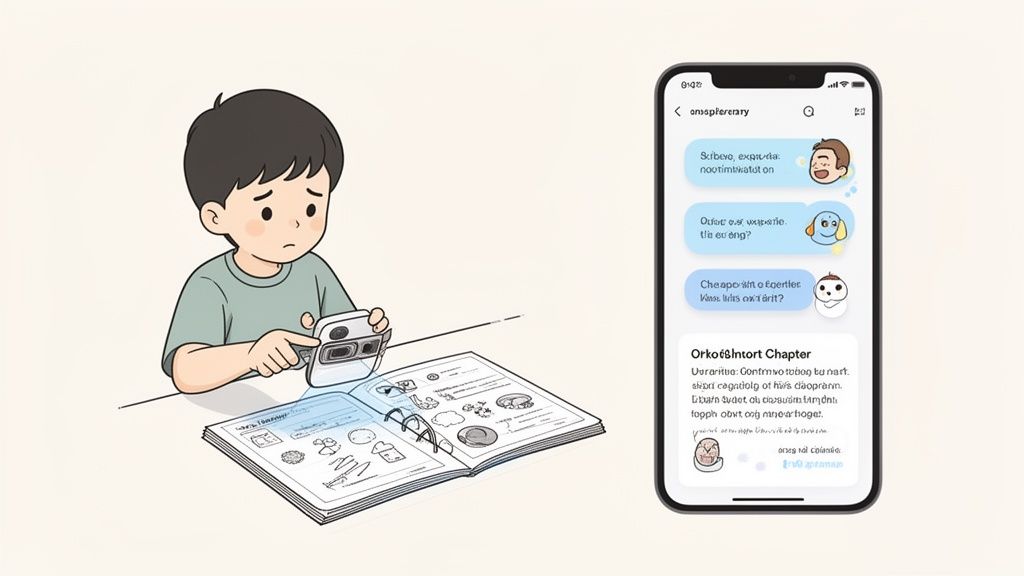
Picture this: your high schooler is staring at a physics problem, completely stumped. In the past, this might have ended in a meltdown (yours or theirs). Now, they can snap a photo of the problem and get a step-by-step walkthrough. The point isn't just to find the answer but to actually understand the process of how to get there.
Here are a few real-world situations where an AI assistant like Feen can really help:
- Beating the Blank Page: Staring at a blank document for an essay is intimidating. An AI can take the prompt and generate a solid outline, giving your child a clear structure to start organizing their thoughts.
- Decoding Dense Textbooks: Is a 30-page chapter on cellular biology putting your kid to sleep? They can upload the file and get a quick summary of the most important concepts, making the material much easier to digest.
- Explaining Tricky Concepts: If a term like "mitochondria" is just not clicking, a quick chat can provide a simple analogy or a clear definition. Confusion can turn into comprehension in a matter of seconds.
By offering instant clarification and structure, these tools give students the power to solve problems on their own. That feeling of "I can do this" is one of the most powerful motivators out there.
Here's a look at the Feen AI interface. Notice how clean and simple it is—no complicated menus or confusing buttons.
A student can just drag and drop a PDF or an image to get help. Making the tool this accessible is key; it needs to be an easy, go-to resource, not another complicated chore to figure out.
Fostering Independence, Not Dependence
I get it. The first question most parents ask is, "Won't this just teach my kid to cheat?" It's a valid concern, but it all comes down to how the tool is used. The focus should always be on understanding the logic, not just copying the answer.
This is especially helpful for parents who, like me, might not remember the finer points of calculus or chemistry. You can't always be the expert, and that's okay.
Think of it as a tutor that’s available 24/7. It doesn't do the work for them; it gives them the understanding they need to do the work themselves. As kids start seeing that they can tackle tough subjects successfully, their self-belief grows, creating a positive feedback loop of motivation and achievement.
If you want to explore this further, we have a whole guide on how to use AI for studying that's packed with practical tips.
Got Questions? We’ve Got Answers
Even with a solid game plan, you're bound to hit a few bumps in the road. It’s totally normal. Here are some of the most common questions I hear from parents trying to navigate the tricky waters of student motivation.
What If My Kid Has Zero Interest in a Mandatory Subject?
When your child just can't stand a required subject, the goal is to find a connection, not force a conversion. You don't have to convince them to love history; you just need to make it relevant to something they already do.
Does your fashion-obsessed kid groan about social studies? Spend some time looking at the history of clothing through different eras. Got a gamer who avoids math like the plague? Show them how geometry and physics are the secret sauce behind their favorite video games. The whole idea is to build a small bridge from their world into the classroom.
The point isn't to spark a lifelong passion for every single subject. It's about finding a personal hook—even a tiny one—that makes the work feel less like a chore and meaningful enough to get done.
How Long Until I Actually See Results from These Techniques?
I wish I could give you a magic number, but motivation is a marathon, not a sprint. You might notice some small, positive shifts in a week or two, like fewer arguments about getting homework started. But building that deep, lasting intrinsic motivation? That can take a few months of real consistency.
Remember to track progress beyond just their report card. Keep an eye out for the little things that show you’re on the right track:
- They start an assignment without you having to nag them.
- They ask a question that shows they’re actually curious.
- They stick with a tough problem for a few more minutes instead of giving up right away.
Celebrate those little victories. They’re the foundation for a genuine desire to learn.
My Teenager Says Reward Systems Are Childish. Now What?
You know what? They have a point. For most teenagers, the best incentives aren't "things," they're trust and autonomy. So, instead of offering an extra hour of screen time for a finished assignment, shift the focus to earned independence.
Try framing it like this: "Once you have your assignments planned out and have made a good start, the rest of the evening is yours to manage."
This kind of approach respects their growing need for control over their own lives. When you link their academic responsibility to privileges they actually care about—like more freedom to hang out with friends or a later weekend curfew—you tap directly into their powerful drive for independence.
Ready to give your child a smart study partner that cuts down on frustration and builds up their confidence? With Feen AI, they can get instant, step-by-step help with tricky problems, summarize dense textbook chapters, and organize their thoughts for essays. Give it a try and see how the right tool can completely change the tone of their study sessions.
Relevant articles

Discover how to use AI for studying with proven strategies that actually work. Learn to leverage AI study tools to ace exams and understand complex topics.

Discover how AI powered study tools are changing education. Learn how to choose the right AI helper, use it ethically, and study smarter for any subject.

Discover key math problems for 5th graders covering fractions, geometry & more. Includes step-by-step solutions & teaching tips to boost skills.
Discover our comprehensive roundup of math problems for 2nd graders, with free practice sets for addition, word problems, money, and more to boost skills.